New innocence motion: Former sheriff's deputy says after KCKPD's Golubski threatened her, she was turned away by Internal Affairs

By Melinda Henneberger
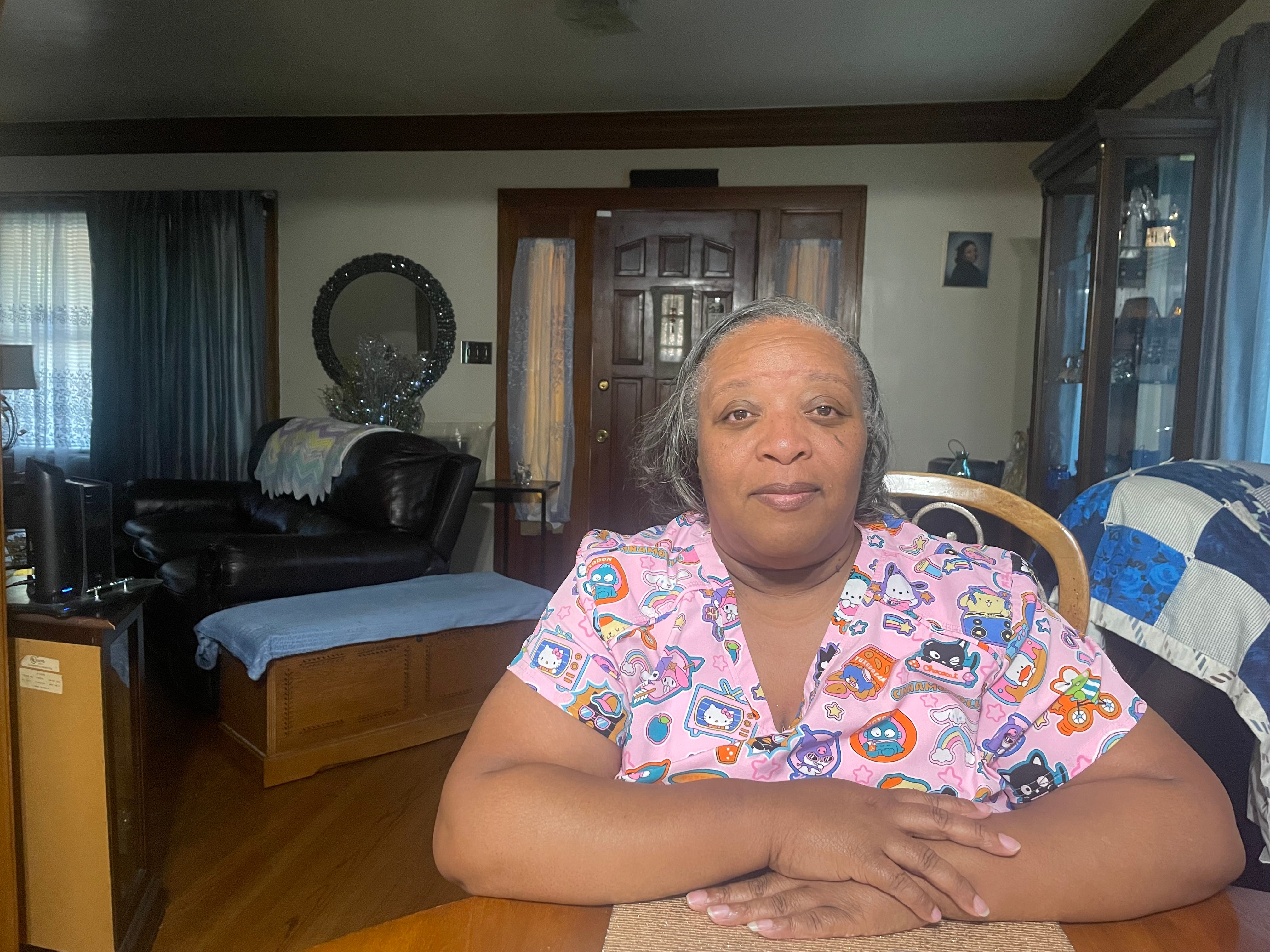
Davilyn Dobbs, herself a former Wyandotte County sheriff’s deputy who worked in the jail, says that the first time Roger Golubski pulled her over and informed her that she’d either have sex with him or he’d send her sons to prison, she didn’t even know who he was beyond that he was KCKPD and in a detective car.
“I said they haven’t done anything,” she told me in an interview in the Kansas City, Kansas home where she grew up. “He said it doesn’t matter. If you want to save them, you need to have sex with me. He wasn’t aggressive that day, wasn’t forceful,” in fact speaking as though nothing could be more normal than the terms of his bargain. “But it shook me. I said I don’t even know why you would approach me in that manner, and he said I’m just letting you know what you can do.”
Then he got back in his car, and once she caught her breath she went on to work, just up in the next block, at the old Acme Radiator & Air Conditioning on N. 10th Street. She told none of her coworkers what had happened, and nobody in her family, either.
Golubski made good on that threat, and others that followed, according to a motion filed in Wyandotte County District Court on Tuesday. In that motion, lawyers for the Midwest Innocence Project say Davilyn’s son Donnell Dobbs, now 39, got a 25-to-life sentence for shooting two men in broad daylight at TJ’s Barber Shop in 2008, in a case completely orchestrated by Golubski.
The former KCKPD detective, who had been charged with crimes involving rape, kidnapping and a sex trafficking conspiracy, killed himself rather than face his accusers, including Davilyn Dobbs, on what would have been the first day of his first federal trial in December of 2024.
The motion making the case for her son’s innocence, and seeking a new trial for him, also says that Davilyn did try to report Golubski to the Internal Affairs Department of the KCKPD, but they didn’t take her complaint seriously. She’s not sure when she called, but thinks it was before she even knew who Golubski was. What she remembers clearly, though, she says, is that the officer who took her call was dismissive.
‘How do you know he’s a police officer?’
According to her, the officer who answered the phone did not say he’d work with her to try to find out who that KCKPD detective she was describing might have been. He did not say that she should call back if this happened again, or if she learned more, or if this person followed through on his threat. So she did not call again.
“He told me it was my word against his since he didn’t physically touch me. I described him, I told what kind of car he was in. He said well how do you know he’s a police officer? I said who else would pull me over with flashing lights? It wasn’t the regular black and white car; he had the detective’s car. He said, ‘Unless you’ve got some physical proof…’ ”
’I thought he was too arrogant for that.’
Davilyn was more surprised than others were that she didn’t get to testify against Golubski, whose lawyers and former employers maintain that he was the one who was wrongfully accused. She was not among those who’d said all along that he’d “eat his gun” rather than face justice: “I thought he was too arrogant for that.”
The nine women who were going to take the stand at that first trial, including one with Golubski-related PTSD so severe that leaving the house is a struggle, were willing to show up and be painted as liars looking for a payday. Yet rather than contemplate prison, or endure the embarrassment of one more perp walk into the courthouse in Topeka, this man so feared on KCK’s North End told his son Matthew on the morning of his death that he simply was “not strong enough to do this.”
So here we are, with Davilyn, who is 60, now hoping to get to testify at the new trial she wants more than anything for the son she has been visiting in prison most weekends since he was 21 years old. “I know in my mind that it’s not my fault” he’s there, she said, but “I feel like my saying ‘no’ cost my son 18 years.”


In 2022, Luke Nozicka, an investigative reporter who later went to work for the Midwest Innocence Project, wrote a news story for The Kansas City Star headlined, ‘DA unit believed prisoner was innocent of KCK murder, thought Golubski tainted case.’
“Last year, a unit looking at old cases in the Wyandotte County District Attorney’s Office came to believe Dobbs, now 35, is innocent, The Star has learned. The case stalled, though, when every member of the DA’s Community Integrity Unit, which investigates possible wrongful convictions, was fired in May 2021, multiple sources confirmed.
Before the firings, the unit conducted a lengthy investigation into Dobbs’ case, which lacked physical evidence. Dobbs was convicted of first-degree murder and attempted murder primarily on the word of one witness in the Oct. 3, 2008, shooting, which killed a man named Muryel Josenberger. A person with knowledge of the DA’s investigation told The Star that witnesses said then-captain Roger Golubski, who has long been accused of terrorizing and raping Black women in KCK, had pursued one of Dobbs’ female relatives for sex before the shooting and Dobbs’ arrest.
The unit came to believe Golubski “manipulated” evidence and targeted Dobbs because he was a relative of the woman. The unit, known as the CIU, developed information about another suspect and believed Golubski was also protecting a drug dealer. The unit thought Dobbs was elsewhere during the shooting. The CIU presented its findings to District Attorney Mark Dupree and his chief deputy prosecutor in April 2021 — weeks before each CIU member was fired, according to sources familiar with the matter.”
‘Integrity both today and tomorrow’
The story included Dupree’s promise that “We are going to look at it. Why? Because we need to make sure that every conviction that he was on and others hold integrity both today and tomorrow.”
Yet the case has remained stalled ever since, and Dobbs has remained behind bars in Lansing. After those firings, Davilyn never heard another word from Dupree’s office, which she said she has visited and called many times, each time being told to leave her contact information.
Evan Glasner, a Midwest Innocence Project lawyer trying to get Dobbs a new trial, said there are echoes here of the Golubski cases against Lamonte McIntyre, who served 23 years for a double murder he did not commit, and Cedric Warren, who was released after his conviction was thrown out in 2024.
That’s because McIntyre’s mother Rosie McIntyre was assaulted by Golubski in police headquarters and Warren’s mother Kathy Warren was pursued by him, too. “Golubski had been rejected” by Davilyn, Glasner said, “and as is the case with McIntyre and Cedric Warren, when a woman tells him no, he decides to make it his mission to get back at her male relatives.”
‘They do not seem interested.’
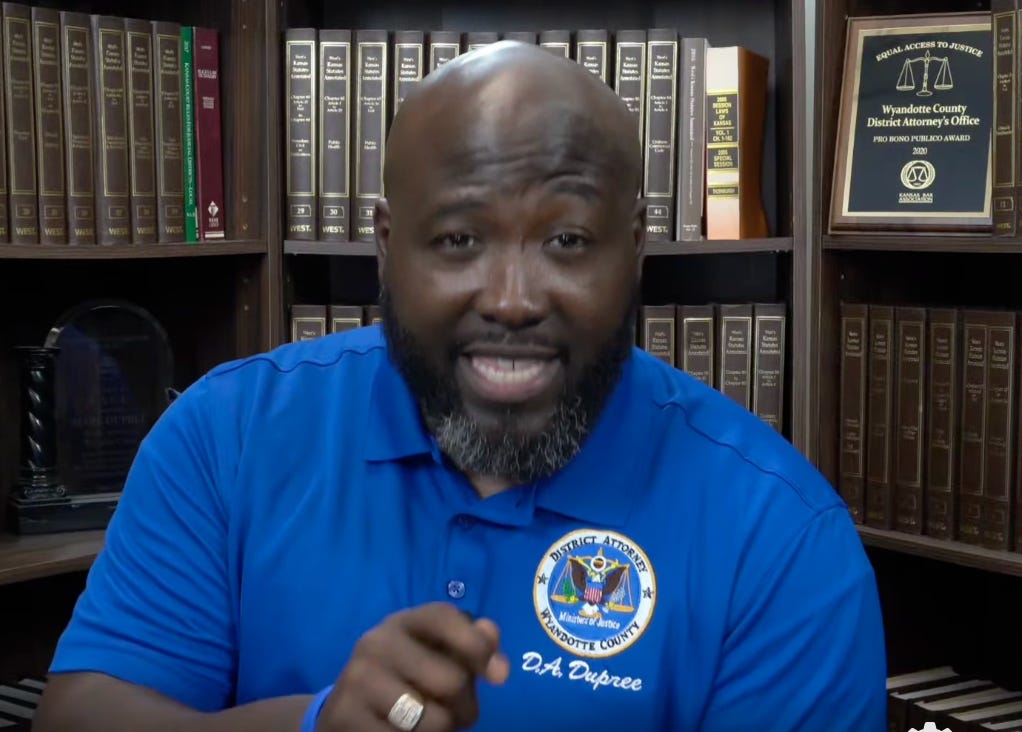
After a recent meeting about this case with DA Dupree, however, Glasner concluded that “they do not seem interested in looking into the case in any way,” or even in turning over important potentially exculpatory evidence as any entity of the state in possession of such evidence is required to do, instead telling the MIP team that “those are KCKPD records, so you have to get them through the KCKPD.”
“In the meeting we had with Dupree, he asked me what proof we had of the Davilyn-Golubski interactions,” Glasner said. “My jaw basically dropped when he said that.”
Are we losing ground here? It’s still true that the one and only innocence case with which Dupree’s office has cooperated since he declared the case against McIntyre a “manifest injustice” in 2017 was when poor Pete Coones was freed in 2020 — even the judge cried that day — shortly before he died of cancer. A second case is in the works now, that of Ahmon Mann, and I very much hope that this turns out to show proof-of-life for Dupree’s Conviction Integrity Unit.
As long as Dupree’s CIU gets so much credit just for existing, though, he can have it both ways — as the guy who talks about bringing justice and taking on the Old Guard without ever really doing either.
‘They just didn’t like each other.’
But first, maybe you’d like to hear about the murder Dobbs went away for all those years ago. That happened around 4:25 p.m. on Oct. 3, 2008, when someone wearing a hat and a bandana pulled over his face walked through the front door of TJ’s with an assault rifle and shot two customers — 20-year-old Muryel Wayne Josenberger, who died, and Mario Mitchell, who survived.
It matters that even before that day – and well before Davilyn ever met Golubski – things were not “all that great because there’s always been an issue between my sons and this one person, which was Mario Mitchell,” the man who was shot 12 times at the barbershop and lived.
In this case, “always” goes back to grade school. The boys “just didn’t like each other,” she said. According to the motion, records show that Mitchell was kicked out of F.L. Schlagle High after the school principal saw him start a fight with Dobbs. Mitchell was gone, but the problem between them was not: Even after a peace deal brokered by Davilyn’s ex-husband, who also worked for the WyCo sheriff’s department, and convened the boys and their parents there, things only got worse.
Her family’s homes were shot up more than once, she said, and showed me two bullet holes in her mom’s dining room walls. On one occasion, “my mom, she was sitting in front of this window in this chair. If she had sat up, the bullet would have hit her in the back of the head.”
Her father did get wounded, in a 2005 drive-by shooting, while mowing the grass alongside her son. A friend of Mitchell’s was arrested, and that crime is how Davilyn apparently came to Golubski’s attention in the first place. It was after that that, according to the MIP lawyers, that he started harassing her and her sons.
According to an affidavit, Golubski pressured a young woman to falsely implicate Dobbs in her accidental shooting about a year before the barbershop murder, but she refused.
After Mitchell was shot, the way the brief lays it out, he did not refuse.
“An investigation into Mitchell would have yielded a deep criminal history,” the motion says, but that didn’t happen. Why? “By information and belief, subpoenas to law enforcement would also have revealed Mitchell’s history as a police informant.”
“Mario Mitchell was Teflon Man,” Glasner told me. On Oct. 3, 2008, he certainly was, because after being shot a dozen times he never even blacked out.
Golubski and two of his detectives, Bryan Block and Darren Koberlein, were at the crime scene, where Golubski took charge of the investigation. Here are just some of the reasons set out in the 93-page motion that Dobbs had nothing to do with the shooting:
Jury never heard alibi testimony.
First, unless he can bilocate like the Italian saint Padre Pio, or use a magical time-turner to be in two places at once like Hermione Granger, he could not have done it because he was at the funeral of a friend, Donald Porter, that day, and surrounded by others at every moment.
Donnell never had a car. But Donnell’s older brother Deon had inherited his grandmother’s 1999 Monte Carlo, and he was frequently stopped and searched by Golubski. Deon drove that car, which Donnell supposedly used for the 4:25 p.m. shooting, to pick his mother up from work at the county courthouse at 5 p.m. sharp that day. When Deon and Davilyn got home at 5:30, she said, her house on 83rd Street was filled with friends of Donnell’s who had come back from the funeral with him.
Several of these friends thought they were going to offer alibi testimony at his trial, but were for some reason never called upon by his court-appointed lawyer. So the jury never heard anything about an alibi.
A witness who saw the shooter outside the barbershop before he put on his bandana and hat described him as of fairly average size, thin-to-medium build, with braids. Dobbs, a former lineman for the Dodge City Community College football team, is a big guy, weighing at least 260 at the time, and he always kept his hair short. This same witness, the motion says, told his brother afterwards that he recognized the shooter as a man named Keith Wright. This witness was not called to testify.
Jury never heard about alternative suspect, either.
Relatives of the victim were so sure, too, that it had been Wright – that talk was all over town – that when they found him later that same day, at the Juniper Gardens housing complex, there was a shootout at which Wright wounded one of the relatives of the man who’d just been shot to death at TJ’s. KCKPD initially put out a “pickup order” for Wright in both shootings, but they never charged him in the barbershop shooting, and eventually dropped aggravated battery charges against him in the Juniper Gardens shooting, too.
Wright had been a key prosecution witness in an earlier case Golubski and Block worked on.
Tips that came into the KCKPD were also about Wright, but these were ignored, the motion says. One tip to Crime Stoppers “was delivered to Captain Golubski. The caller identified Wright as the shooter and indicated the incident may have occurred after one of the victims started dating the mother of Wright’s child.” The intended target of the shooting was Mario Mitchell, according to the motion, rather than the man who died, Muryel Josenberger.
Jail records show that Wright had assaulted his child’s mother three days before the barbershop shooting. He had held her down and cut her hair off in front of her sister. Then he’d spent the night in custody and been released.
But the jury never heard a word about any alternative suspect, either.
How did Dobbs even become a suspect?
So what did police do after the shooting? And how did Donnell Dobbs even become a suspect? That second question is answered nowhere in the files, Glasner said.
After KCKPD Det. Bryan Block interviewed Wright on Oct. 6, the motion says, “there are no records of any police investigation occurring in the barbershop case until police interviewed Mitchell on October 15.”
There is no mention of why Wright was dismissed as a suspect, and also no mention of Dobbs at all, Glasner said, until two weeks after the shooting, when police brought a photo lineup that included a photo of him to Mitchell in the hospital.
This same photo lineup had been used in a previous case, which suggests it had nothing to do with information developed about this one. And why show him a photo of a man he had known since childhood?
Initially, Mitchell had told police that he thought there were two shooters, and that he didn’t know either of them. But now, after an unrecorded hospital chat with detectives and after looking at the photos, he remembered that the man who shot him “look to me like Donnell Dobbs.” At his 2009 trial, the prosecutor said, “all of this case comes back to identification” and to their “star witness,” Mario Mitchell.
The motion claims Mitchell has since told a friend that he never knew who shot him, but that was a private conversation, and the now former friend who revealed it lives outside the country in apparent fear of retaliation.
‘That day he was very forceful.’
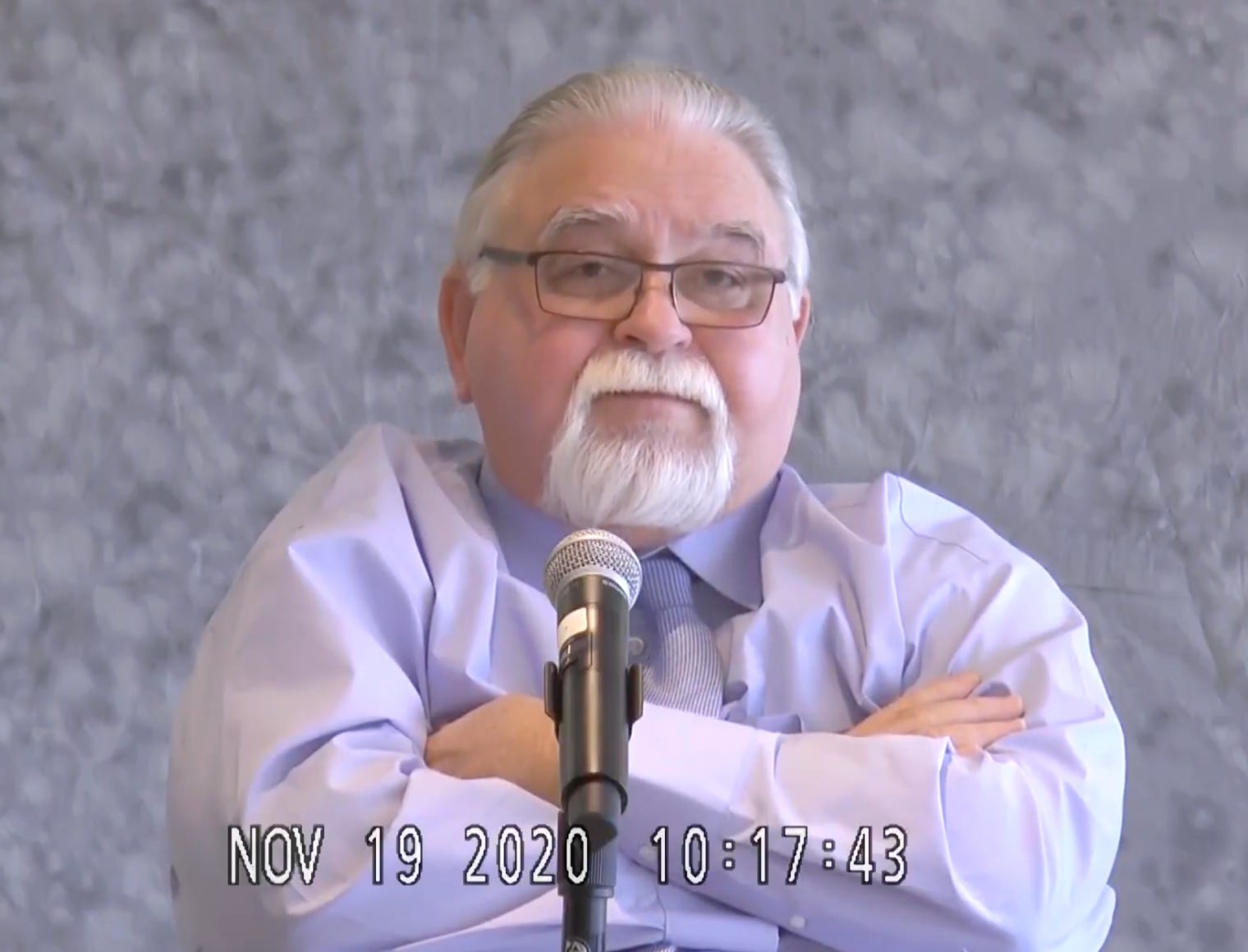
The last time Golubski pulled Davilyn over was not long before the barbershop shooting, Glasner said. And “that day he was very forceful,” Davilyn told me, ordering her to follow him behind a building at the V. Lindsay SDA School just blocks from her mom’s home:
“He said he needed me to follow him to that building around the back so he could talk to me. I said you could talk to me right here, there’s no reason for me to go anywhere with you. He said no, you’re going to go over there, and he told me that I was going to suck his dick.
And I told him no, that’s not happening. He said if you don’t follow me over here, there’s going to be a problem. I said it’s already a problem, you approached me again demanding sexual favors or whatever it is from me. I knew if I followed him over there something bad was going to happen. So I took off and I came here to my mom’s house and I was shaking. When he was asking me for sex, I felt degraded, I felt less than – I couldn’t believe this was coming from this man in law enforcement.”
Her eyes have been filled with tears through a lot of our interview, and I don’t know that it was easy for her to tell me that maybe because she and her ex-husband had also been in law enforcement, she hadn’t initially paid much attention to the talk from relatives about some cop who was abusing women off Quindaro. “I just thought they were overexaggerating.”
‘I never saw him again.’
The day after Mitchell said the shooter looked like her son, police called and asked Davilyn to summon him to her house, which she did. Then dozens of armed officers swarmed the Dobbs home, where he was arrested. “I never saw him again,” outside of custody, his mother said.
According to the motion, “Golubski stood across the street, watching.”
He came back day after day that week, looking at cars they owned, and on one of these visits, the motion says, told Davilyn that he’d “warned her he would get her sons.”
His lead investigator on the case, Bryan Block, who also worked on the thrown out Cedric Warren and Pete Coones cases, lost his badge in 2013, reportedly after wounding a bar bouncer he shot twice in the stomach. He got probation and became an electrician.
Judge Robinson: ‘Golubski had a pattern of fabricating and suppressing evidence.’
The innocence motion for Dobbs says that no information about the Juniper Gardens shooting — which could be exculpatory by offering potentially crucial evidence about an alternate suspect — was ever turned over to his defense lawyer. That’s the information that the MIP is still trying to pry loose from the KCKPD or the DA’s office.
The brief also says that information about the many previous violations of officers who worked this case was never disclosed to the defense, which if true would also be a violation of Dobbs’s constitutional rights. And on that point, the motion quotes from a ruling by U.S. District Judge Julie Robinson in the civil case brought by Pete Coones’ family:
“KCKPD detectives, along with older officers and the commanders, knew that Golubski was pursuing Black females and having sex with them, and that Golubski had fathered children with poor, Black women in the north end of Kansas City, Kansas,” Robinson wrote. “Witnesses inside and outside the KCKPD knew that Golubski had sexual encounters with Black informants.”
Golubski committed an integrity violation early in 1978, causing him to be added to the KCKPD’s Brady/Giglio list, which disclosed his misconduct to prosecutors. [This misconduct concerned his statements to investigators about a man who died in police custody after Golubski admitted beating him with a nightstick. The death was ruled accidental.]
The KCKPD received complaints about Golubski’s misconduct as early as the 1980s, but they refused to investigate or follow-up on them.
In all, Golubski received 11 administrative complaints and “other contacts” complaints between 1993 and 2011. These included complaints that he bent a subject’s arm and slapped her face, swore at a juvenile suspect and tried to coerce him into making incriminating statements, arrested a suspect without probable cause, and made racial and sexual comments towards a witness. Golubski also had a pattern of fabricating and suppressing evidence. …
Nonetheless, the KCKPD and Unified Government claim to be aware of only one disciplinary proceeding or internal affairs investigation regarding Golubski: the 1978 complaint for which he was suspended.”
This is particularly interesting because though as of last year 55 exonerations had been tied to the wrongful convictions of those framed by retired Chicago Police Detective Reynaldo Guevara, he faced no internal discipline and had no upheld complaints. This year, Chicago is set to pay another $29 million in settlements to some of those people, on top of the $90 million it doled out last year to settle 176 police misconduct and wrongful conviction lawsuits tied to former Sgt. Ronald Watts.
I don’t know that it’s the fear of more payouts like the $12.5 million settlement to Lamonte McIntyre that’s behind the dismal, do-nothing record of the CIU, but I do know that words and actions from the DA have not been a match for a long, long time. How long can you say it’s a new day before you actually have to show that it is?
If you took Golubski out of this case, Dobbs would still deserve a new trial. But if you took Golubski out of the case, would there be one?
If you’ve made it this far into this story— Hi in heaven, Mom — your question, like mine, has to be why. Not only why Dobbs was arrested all those years ago, but why he’s stayed in prison five years after the DA’s office told him that his case was being reopened.
And why have there been no more innocence cases since Coones, convicted on the coerced say-so of a mentally ill inmate, was freed in 2020?
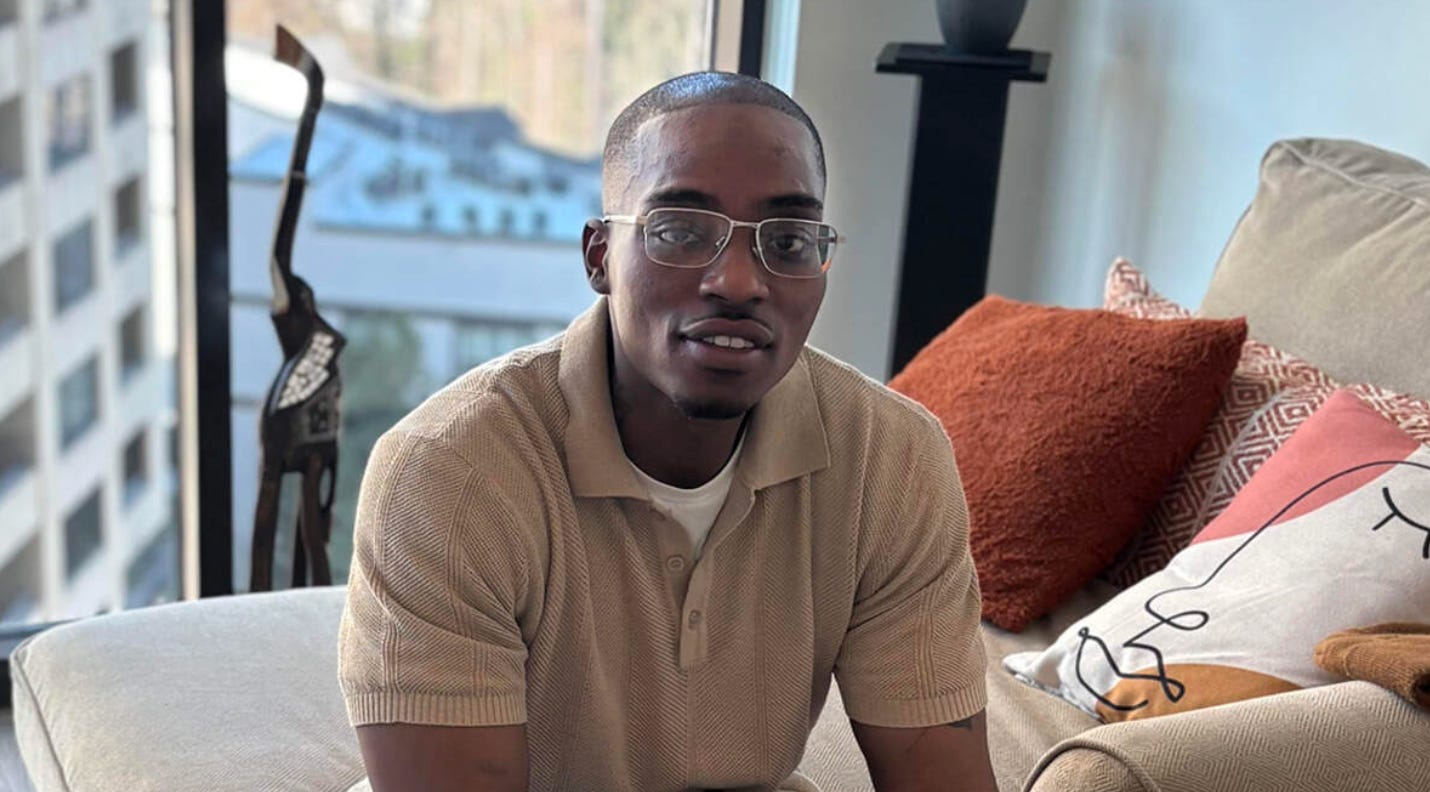
In the case of Cedric Warren, convicted on the testimony of a homeless man who was so seriously mentally ill that Detective Bryan Block (see above) drove him to an inpatient unit to question him there, Dupree’s office fought the reversal right up to the end.
Then he took credit for it – not the first time a DA has done that. But even then, Dupree went out of his way to say that it wasn’t a Golubski case anyway, though the dead detective’s name was all over the investigation. Why?
The Lost Cause history of Roger Golubski
Recently I heard a remarkable interview with the human rights lawyer Bryan Stevenson, who said that the civil rights struggle of our time is the struggle for the narrative, which the Union lost after the Civil War, with the sick Lost Cause romanticizing of the slave-holding South.
That reimagining has been so damaging to us all, and is why Florida schoolchildren are being taught that some enslaved people benefitted from being property because they learned useful skills. History is being rewritten every day.
That is not only true at national historic sites, but right here, where the less said about Roger Golubski – or much more importantly, the less done for those still wrongfully in prison because of him – the better. You don’t have to say his name, but you do have to right his wrongs.
Every year that passes and every victim and witness who dies makes it easier for the reprehensible Lost Cause history of Roger Golubski to be revised, too.
“The Old Guard still holds considerable sway” in KCK, someone who tried to make some reforms there and did not find the New Guard all that new, told me.
A former WyCo official said that in the run-up to what would have been Golubski’s second trial this coming November, of his three former co-defendants on sex trafficking conspiracy charges, the Old Guard’s efforts to rewrite the record will only intensify.
The struggle for the narrative
In what he says, Dupree has always been on the right side of the narrative. He speaks about how scary it was to declare the case against Lamonte McIntyre a “manifest injustice” in 2017, when nobody wanted him to. And no doubt, they didn’t.
The following year, he started the Conviction Integrity Unit, and has talked a lot about the difficulty of taking on the Old Guard in doing that. He did it anyway, he said, because “if there’s one” case like McIntyre’s, then “there are more.” He was right about that, too.
But in the years since then, Dupree has been hailed as another Larry Krasner, the progressive Philly DA, without having to actually deliver. And with so much patience and acclaim just for promising the right things, why would that change?
Four years ago, in 2022, he got $1.7 million from the Unified Government to digitize the Golubski files, which he said was holding up progress. That seemed logical, though there was no transparency into that process.
Almost a year ago, he gave an interview to KCUR in which he said they were looking at 19 Golubski cases.
But now, why is Dupree dragging his feet on turning over what he’s required to give lawyers for Donnell Dobbs and asking how we really know his mother even knew Roger Golubski?
“If they were working on 10 other cases, that would be one thing, but what are they doing?” asked Glasner.
In December, lawyers for Ahmon Mann, who is serving a life sentence for a 2000 murder, also filed a motion saying Golubski was “the main architect of the state’s one-witness case,” against him. That 15-year-old homeless witness, who first recanted in 2011, said he had not even seen the murder but lied because Golubski and his then-partner, Terry Zeigler, who later became chief of police, threatened to pin a murder on him if he did not.
From what’s been filed, it looks like the DA’s office is working in tandem with Mann’s lawyers in this one case, and that’s a clear positive.
I also still dare to hope that someday the CIU will look at the standing-in-the-middle-of-the-street-screaming innocence of another Golubski victim, Curtis Coleman, who at age 15 took the blame for a 1998 murder he could not have committed, either.
But at this rate, if they eke out one of these cases every six years, innocent people will die in prison. And the human cost of the lack of pressure on Dupree to do more will be incalculable.
You continue to do vital work. Thank you.
Disturbing is an understatement. What the hell is going on with the DA in Wyandotte county???
Thank God you are writing about it.
Let us know how we can help.