Sporty Kansas City
The Kansas City region loves sports. It is spending billions to keep teams and fans happy.

By Dave Helling
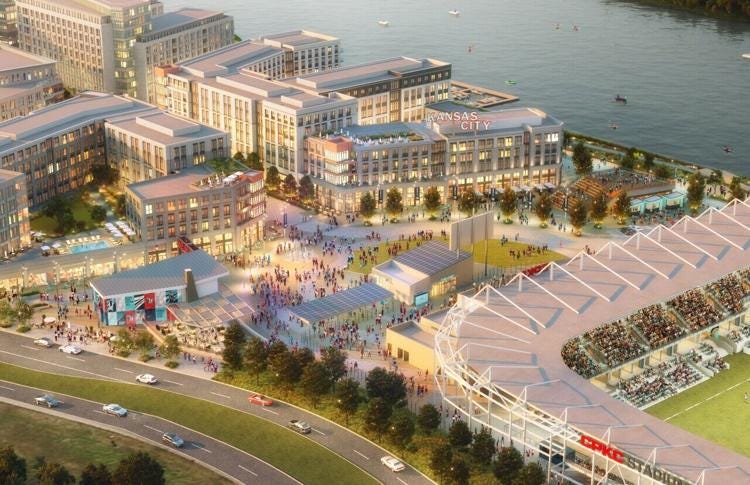
Kansas City Mayor Quinton Lucas called for a fastball last week, in the middle of the World Cup hoopla, when he proposed substantial city help for the KC Current’s massive riverfront development project.
The women’s soccer team wants to expand its stadium, add parking(!), and improve infrastructure, at a cost of $1.4 billion. The city would issue up to $235 million in special bonds for the project, create a tax increment financing district for public incentives, and ask the state for additional help.
Not a Maserati, but close — a BMW, maybe.
The city’s Finance Committee is expected to discuss the plan on June 30. It seems almost certain to pass, at least in some form, because 1) The Current are popular, 2) women’s sports are popular, particularly here, and 3) Kansas City is placing a huge bet on college and pro sports as economic drivers in the region.
This last item — the Kansas City area’s ongoing enthusiasm for sports and sports subsidies — seems the most interesting.
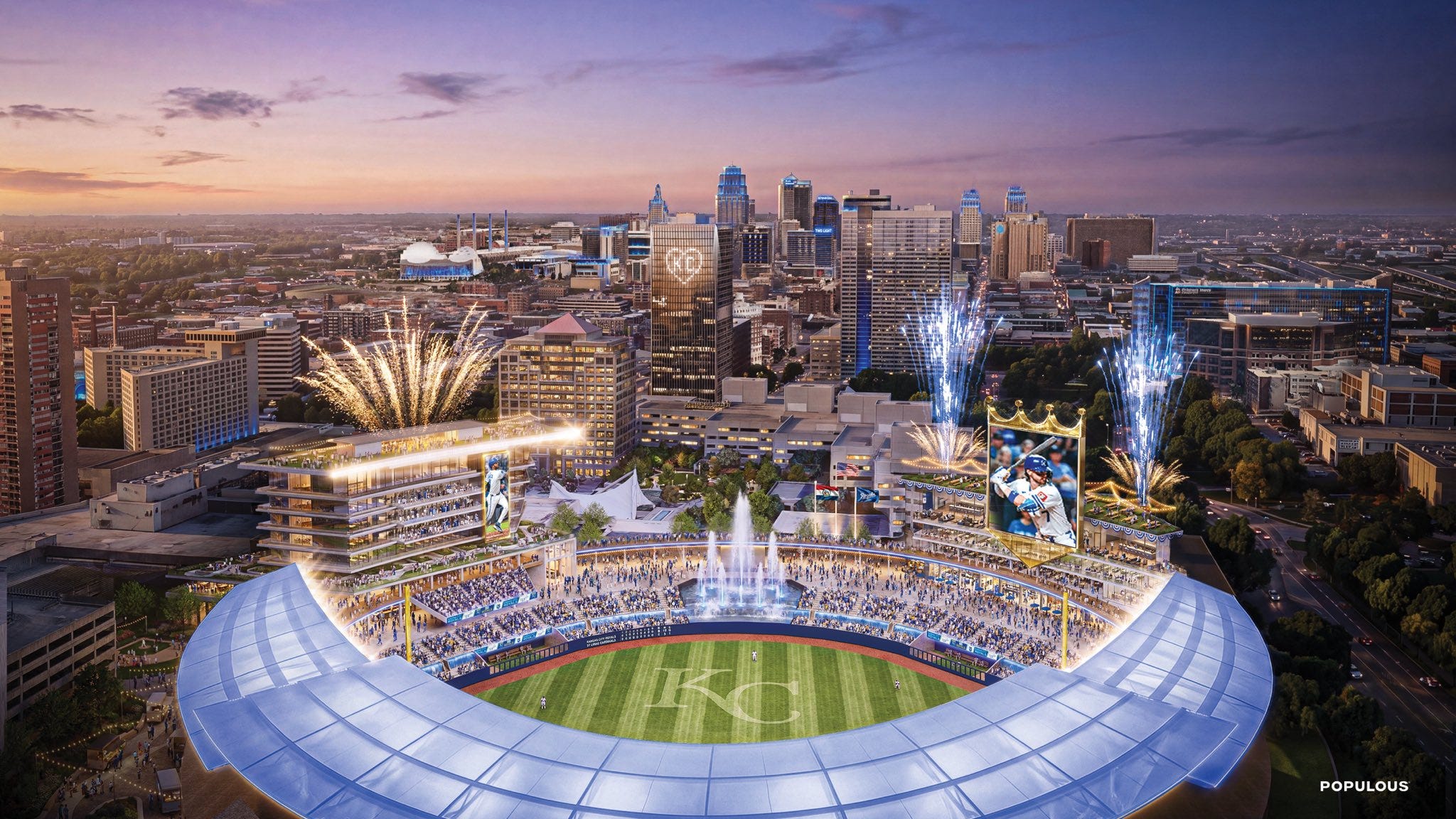
Evidence of the region’s bet on sports is everwhere. After spending hundreds of millions of dollars to keep the Royals and Chiefs at the Truman Sports Complex over several decades, the public will apparently spend billions for new stadiums for both.
Two decades ago voters agreed to tax rental cars and hotels for the T-Mobile Arena. The decision meant the end for Kemper Arena as a venue for pro- and college-level competition, even though taxpayers supported Kemper for years.
Municipal Auditorium is still in use, too. UMKC will play men’s basketball there.
“The agreement includes facility enhancements tied to the arena experience, including coach’s suite renovations and basketball-related upgrades,” the news release says. “The city is paying for those upgrades.”
There’s a hockey arena in Independence and a minor league baseball stadium in Kansas City, Kan. There’s a men’s soccer stadium there, too, built in part with incentives. Across the road you can find Kansas Speedway; it, too, got public help.
Colleges? The University of Kansas just opened a rebuilt football stadium. Missouri is upgrading its football venue. Both will end up costing hundreds of millions of dollars (to be fair, some of the cash comes from donors.)
To all of this, and more, you can add the city’s fierce efforts to host sports-related events: the World Cup, the women’s World Cup, various NCAA tournaments, the NFL draft, NBA exhibitions. (Interestingly, pro golf seems to have skipped us by.)
This region loves sports, and loves handing out subsidies and incentives to keep team owners, and fans, happy.
And they appear to be happy. Kansas City routinely ranks at or near the top for viewership of national sporting events. Just last week it had the highest national ratings for the U.S. soccer team on Fox television.
Nationally, sporting events are incredible over-the-air television draws; of the top 50 TV shows in 2025, 47 were game broadcasts.
Two Kansas City-area radio operations devote their entire day to sports discussion. The most predictable stories for internet traffic, for media content providers, are sports-related.
More broadly, sports remains one of the central unifying endeavors of any city or state, and Kansas City is no exception. We disagree on lots of stuff, of course, but we can all root for the Chiefs, or Royals, or the KC Current.
Politicians love sports, too: they don’t pollute very much, they’re highly visible, they’re only occasionally controversial, they provide a handful of jobs, they’re often a welcome distraction from tougher problems. Swish.
Yet there are warning signs for a region so enthralled with sports, and a seemingly open checkbook. Fans’ enthusiasm for events can tumble in a hurry; Kansas Speedway draws far fewer attendees than it once did, for example. The Chiefs and Royals, in down years, find it hard to fill seats too.
The minor league park in KCK once struggled to pay the bills. The Woodlands was expected to save western Kansas City, Kan., with horse and dog racing. No more.
College sports are in the middle of a financial revolution. Will fans be there on the other side? Who knows?
Mostly, though, the addiction to sports subsidies puts Kansas City in a competition with other cities and states, a sporting arms race that will become more expensive in future years. Lots of cities and states are signing sweetheart deals for teams, or paying for new venues, or both.
There are opportunity costs for such largesse. Kansas City will end up spending well over $1 billion in principle and interest for the Royals’ downtown ballpark, for example. Might that money be better spent on something else? Or not at all?
The Chiefs’ stadium in Kansas is highly controversial, and may become an issue in the governor’s race. Yet Wyandotte County, one of the state’s poorest counties, faces enormous pressure to redirect its new sales tax revenue to the Chiefs project.
You can hear whispers of opposition to these deals, of course, but they are only whispers. No one, it seems, wants to stand in front of the victory parade.
It isn’t clear if or when this arms race will end. It is certain that Kansas City will be among the last cities to ask for a truce.
“Is mayonnaise a sport?” - Patrick Starr (paraphrased)
What does that have to do with anything?
Oh, right,
The basic idea (We all love sports) is correct, but alas, certain sports are more equal than others. I know, I know, someone is already typing “Cmon man, quit complaining”, this isn’t a complaint, it’s only an observation.
I stipulate I love several sports obsessively but it’s not very crowded with either spectators or performers, mostly because ther is not a cent to be made unless one counts the benefits to the perfromers AND observers..
But that’s just me
If it’s a sport from which real solid bricks of cash money (in whatever the reserve currency is now), especially tax money, OK, everyone’s behind it. And I’m fine with citizens having what they want under the circumstances and yes it is a popularity contest, I understand. For some reason my mind always drifts back in time to when real solid bricks (cylinders actually) of thick, luxurious trashbags were aplenty as dandelions in June, they appeareth in Eastwood Hills out of nowhere to my 8yo eyes and they eventually put a stop to the joy of burning trash in the city. Whaat happened to my trash bags, sports fans? Wasn’t that a popularity contest of sorts that was reneged upon?
But I digress
If I’m doing a sport, I want some quick results, because that’s just the way I am. 90+ minutes for a 0-0 does not to me qualify as a real sport let’s put it that way. They should have to keep playing. But they don’t
And the other thing is, the best sports aren’t going to attract a lot of ATTENTION, the best ones are competition between one or more reasonably equivalent opponents not the entire universe. Like chess, against your nephew . which yeah is a game, not really a sport it isn’t a sport until the crying starts and the chessboard is frisbeeed and then you better believe it becomes a sport.
But let’s say a bike race between two people of about the same strengths and skills from one point to another on the same route, but no cams and no refreshment stands for the throngs of spectators. The key factors are not very difficult to identify and understand. Oh, also no rioting fans or stadium stampedes, those are not features anywhere to anyone. Enormous benefit to the public at large and society.
The benefit is in the doing, not in the watching. And when the watching becomes the primary activity, then something is not right with MY values and priorities, not saying anything about anyone else. YMMV