The expanded KC streetcar: Real mass transit, or frou frou?
A little of both, maybe, which the new mayor and council should address

By Dave Helling
In 2019, then-candidate Quinton Lucas — to his everlasting regret — compared a potential downtown baseball stadium to a well-known luxury sports car.
Nice to have, Lucas said, but really expensive.
Could the same be said for another Kansas City project?
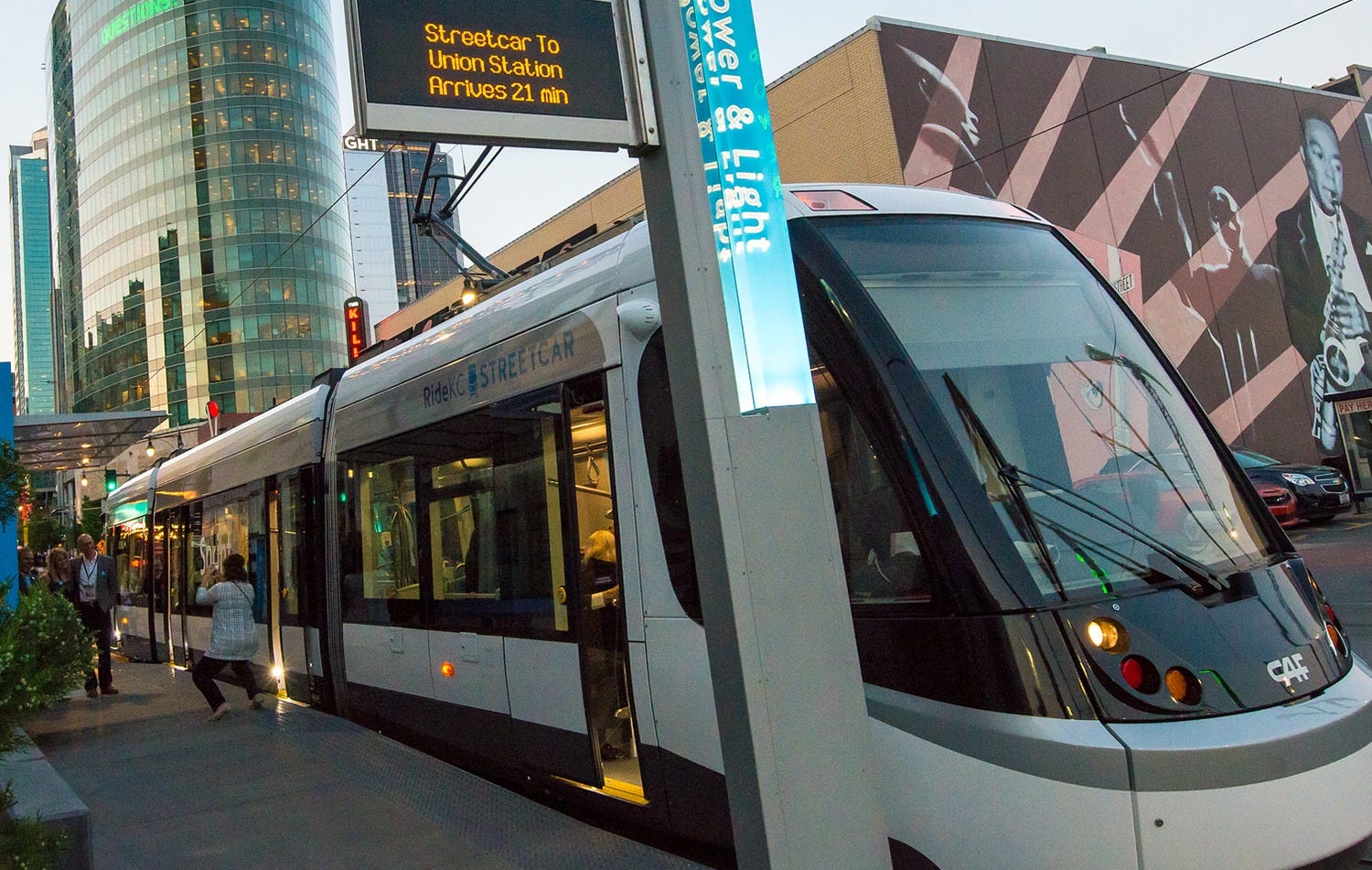
Lucas and a handful of other local honchos recently cut the ribbon on the last segment, for now, of the Kansas City Streetcar. The service runs from Berkley Riverfront Park and the KC Current soccer stadium to UMKC, and back, about 6.5 miles, north to south.
There were backslaps and applause all around. And, perhaps, for a good reason: Kansas City’s streetcar regularly ranks among the most popular extra-light rail systems in the nation.
In March, the Streetcar Authority says, more than 370,000 riders took a trip on the mini-train.
The early decision to make rides fare-free, we now know, was crucial. Free rides not only prompted more people to use the train, but made trips far less complicated — no fare boxes, tickets, cash, no turnstiles or collection agents. Sweet.
“We’ve become the spine of transit in the Kansas City region,” Tom Gerend, executive director of the KC Streetcar Authority said in a story in Governing, a public issues website.
Yet let’s be clear: it’s been an expensive backbone. The 6.5 mile system cost roughly $515 million, or $80 million a mile, give or take, to build. That’s an enormous investment for a transportation system restricted to a track, not a street.
It’s true the money didn’t come from general taxpayers — it was provided by homes and businesses near the streetcar track. The federal government also picked up a big part of the cost, particularly with the Main Street extension.
But the gigantic price tag, and the popularity of the system, sit beside an important truth: while the streetcar rolls, regular city bus transportation continues to gasp for funding.
Despite general sales tax support, the Kansas City Area Transportation Authority is chronically short of cash. The KCATA appears ready to dramatically reduce service after the World Cup tournament this summer.
Buses were once fare-free, like the streetcar; in about ten days, fares for bus transportation will return.
Why would the streetcar set ridership records, while the bus struggles?
The answer seems to be this: The appeal of the streetcar isn’t limited to its practical utility as a people-mover. Instead, riders appear to enjoy its novelty, its relative safety and newness, compared with standard bus transportation.
Riders take the bus to get to work, or home, or to the store. They ride the streetcar for fun.
(Try a thought experiment: would 370,000 people regularly ride free buses from UMKC to the riverfront, and back? It seems unlikely.)
That’s important, of course: no one wants to live in a city that isn’t, at least some of the time, fun. But $515 million is a lot of cash to spend just for transportation as entertainment. And $515 million would do enormous good for a bus system plagued by a lack of cash.
The streetcar, in other words, is like a certain luxury sports car — nice to have, but not cheap.
This potential flaw isn’t fatal. Instead, the next challenge for streetcar supporters will be to more fully integrate fixed-wheel transit with the standard bus, and other public transit systems. The streetcar should be seen as just one part of the city’s mass transit picture, and not, as it often is now, a separate operation.
The next mayor and council, and the region, will need to make public transit an integrated, well-funded whole — not just what Emanuel Cleaver once called frou-frou.
Foreigners visiting Kansas City for the World Cup will be in for a huge culture shock if they try to get anywhere in the region not served by the streetcar or the charter buses to be used during the tournament. Much smaller European cities have better public transit than here, a metropolitan area of more than 2.25 million people.
A pre-main street extension showed that even at its shortest the streetcar wasn't just for “fun”:
Nearly 40% of regular riders use the KC Streetcar four or more days each week.
In terms of trip purpose, 31% of weekday streetcar riders reported utilizing the service for employment-related trips.
That number has probably gone up with it now providing more commuter options with the increased length.
Would all of those riders have taken the bus otherwise? Unfortunately, probably not. But it also doesn't have to be a zero-sum game. The streetcar isn't killing our buses and we shouldn't have to chose between one or the other. Kansas City deserves a reliable public transportation system that involves multiple arms that solve different needs.