An unexpected step towards justice in Kansas City, Kansas murder case

By Melinda Henneberger
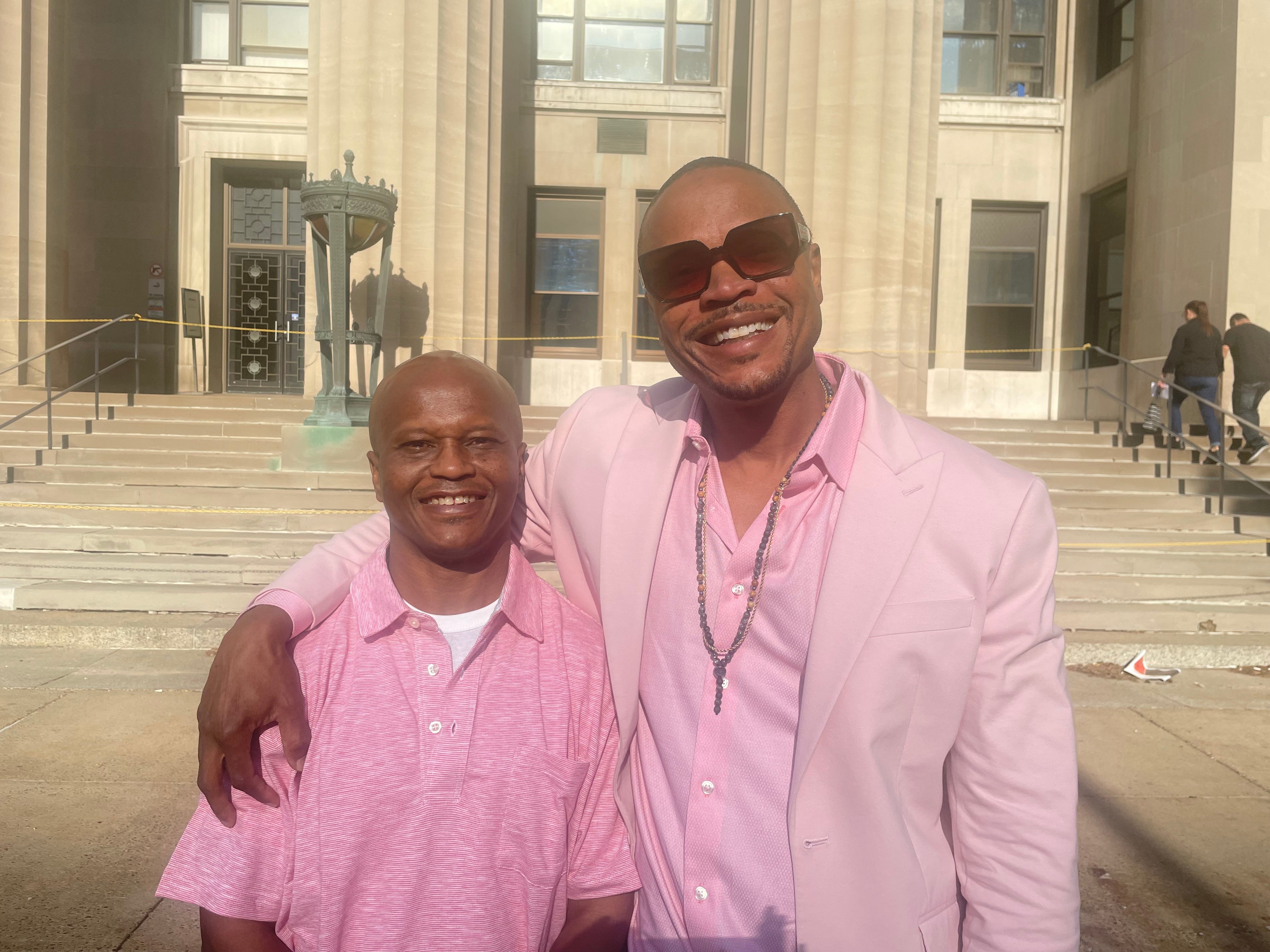
Something rare and unexpected happened on Thursday afternoon in the Wyandotte County Courthouse: Judge Gunnar Sundby ruled that Celester McKinney, who spent 25 years in prison for the murder of a young neighbor, not only had received inadequate counsel previously, but that it might have made a difference in the outcome of his case.
The victim was notorious KCKPD Det. Roger Golubski’s nephew by marriage, 17-year-old Gregory Miller. According to Miller’s own statement to police two years before his death, he lived in a drug house with his uncles. One where, according to testimony this week, Golubski had spent time. And through Golubski, who killed himself on what would have been the first day of his first federal trial last year, Miller had already been a police witness in two murder cases.
Any of the above might have been why someone shot Miller 18 times a few days after Christmas in 1997. Yet none of the above was known to defense counsel, and the judge agreed that this information might have mattered.
Here’s how Lindsay Runnels, of Morgan Pilate, put it in her closing statement for McKinney:
“In 1997, in the North End, deep in the drug war and in the heart of (convicted drug trafficker and Golubski’s sex trafficking conspiracy codefendant) Cecil Brooks territory – to be an informant for the police – against anyone – made you a risk. A target. A problem.
Period. KCK Detectives knew this. Golubski definitely knew this. Anyone who knows and understands the control, power, and context of KCK’s North End in the 90s knows this. To suggest otherwise is untethered to reality.”
The police investigation, as we’ve heard all week from the Midwest Innocence Project lawyers representing McKinney, was so minimal that there was no real effort to find the murder weapons. Prosecutors taped over 10 minutes of video evidence in the case on the literal eve of his trial.
More from Runnels’s closing statement:
“There is no dispute between the parties that Sarah Swain’s performance fell below an objective standard of reasonableness (at McKinney’s 2022 hearing on Golubski’s involvement in the case.)
That brings us to the second, and final, prong of the test: Are we confident in the correctness of this Court’s order denying relief following the 2022 evidentiary hearing? With representation so abysmal, so ignorant of the facts and the law, and with so much evidence unnoticed and ignored, there can be no confidence that the Court’s 2022 Order denying relief was correct. And how could there be? The Court was not provided the mountain of evidence that Mr. McKinney’s trial was unfair, that Mr. McKinney’s constitutional rights were violated.
In all cases, the important prejudice inquiry, the inquiry that really asks, “did it matter” must be assessed within the context of the strength or weaknesses of the case that exists. Here, the case against Les was undeniably thin. Surely no reasonable person can disagree.
When a case is weak, like the one presented to the jury in 1998, the State’s failure to disclose exculpatory material and impeachment evidence always matters.
I want to remind the Court of (then prosecutor, now Judge Dan Cahill’s) opening statement, nearly 30 years ago, “I imagine by the time this case is over, you’re going to have some questions about the way the police handled this case. I know I did - do. I have big questions, and this may turn out to be a landmark case in evaluating the way the police handle it.”
Unfortunately, it was not a “landmark case,” but just another day in KCK.
In ruling as he did on Thursday, Sundby was in effect saying that he himself got it wrong — because he didn’t have all the information — at that 2022 hearing, and that’s impressive.
Why do I say the ruling was unexpected? Not because the facts aren’t on McKinney’s side, because they are. Not because his lawyers aren’t 100%, because yes again. But just because I’m not used to news that makes sense out of the Wyandotte County Courthouse, and may this begin a trend.
Sundby’s ruling in McKinney’s favor means his case will go back to the Kansas Court of Appeals, which could order a new evidentiary hearing.
At least in theory, it could also give Wyandotte County District Attorney Mark Dupree, who stopped by the hearing this week, a limited window in which to either retry the case or dismiss it.
In his opening statement at this week’s hearing, Adam Stolte of the DA’s office said that even if the defense managed to prove ineffective counsel, it would never be able to show it could have changed the outcome of the 2022 hearing. But the judge to his credit found otherwise.
His ruling is “a great first step to complete and final justice for Les McKinney,” said Runnels.
Evan Glasner, senior staff attorney for the Midwest Innocence Project, said, “The evidence overwhelmingly established several constitutional violations, and showed that his conviction should be overturned.”
That conviction, of both McKinney and his cousin Brian Betts, was based almost entirely on the recanted testimony of their uncle, who says he was coerced. Both were paroled three years ago. Their goal since then, as in the previous 25 years, has been to prove their innocence.
We should all hope that they have the chance to do that.
The arc of the universe bends…